AI product. 2026. Founder and architect. TypeScript, MCP, Rust and Axum, React.

NexusMind

A multi-tenant persistent memory and context platform, so a team's AI tools and agents share one auditable memory instead of seven private ones.

Role
Founder, architect
Built in
2026
Runtime
Rust, TS
Deploy
K3s, Ampere
Stack
TS, Rust
Source on GitHub Index
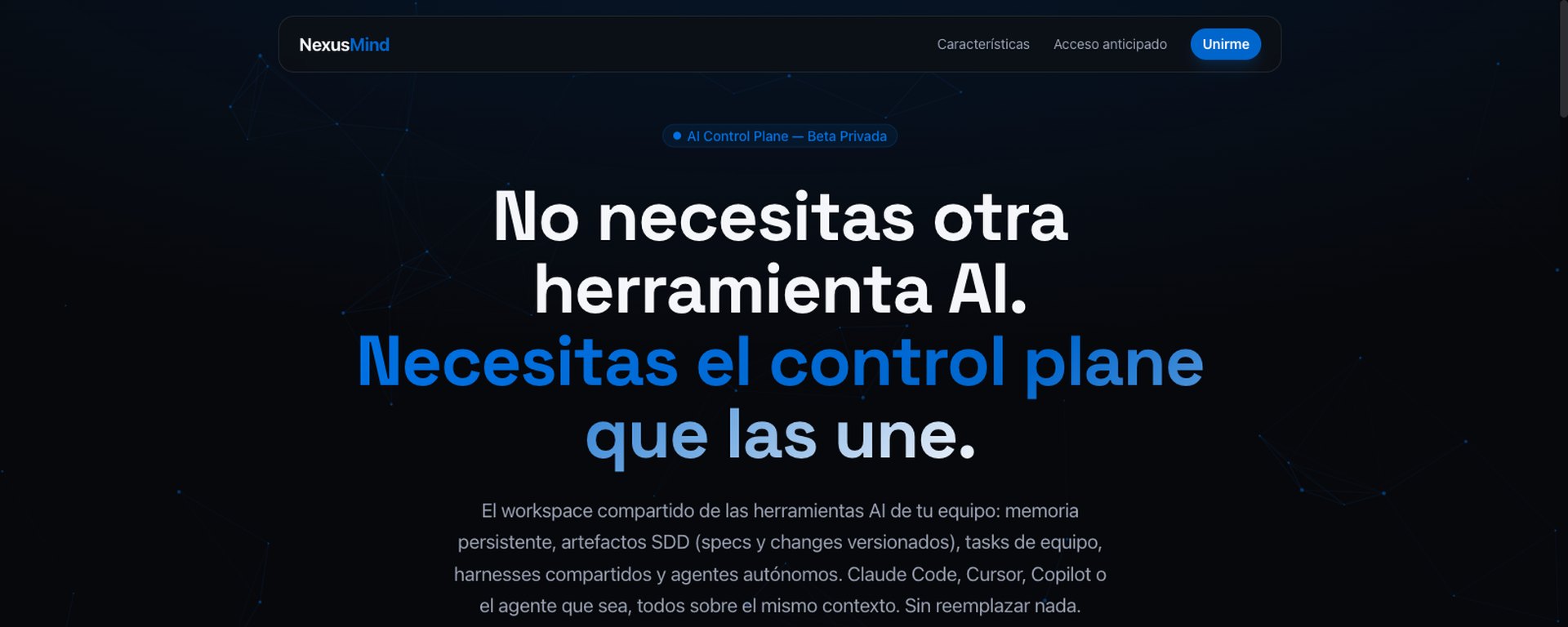
Fig. 01. nexusmind.smartcoderlabs.com, the product landing.

The problem

Every developer on a team runs their own AI coding tool, and every tool keeps its own memory. The same architectural decision gets re-explained five times a week, and nobody can say who deleted what.

I wanted one shared memory with real tenancy and a trail I could query, reproducible with a single Docker Compose command and no database server to babysit. I designed the MCP server and the React interface myself and integrated them with a Rust and Axum backend.

TypeScriptMCPRustAxumReactDocker

One memory instead of seven

Any MCP client on the team reads and writes the same store, so a decision is explained once and found by everyone after that.

Every operation has an actor

Store, search and delete each write an audit row in the same transaction, so the trail can never disagree with the data.

One pod, one file

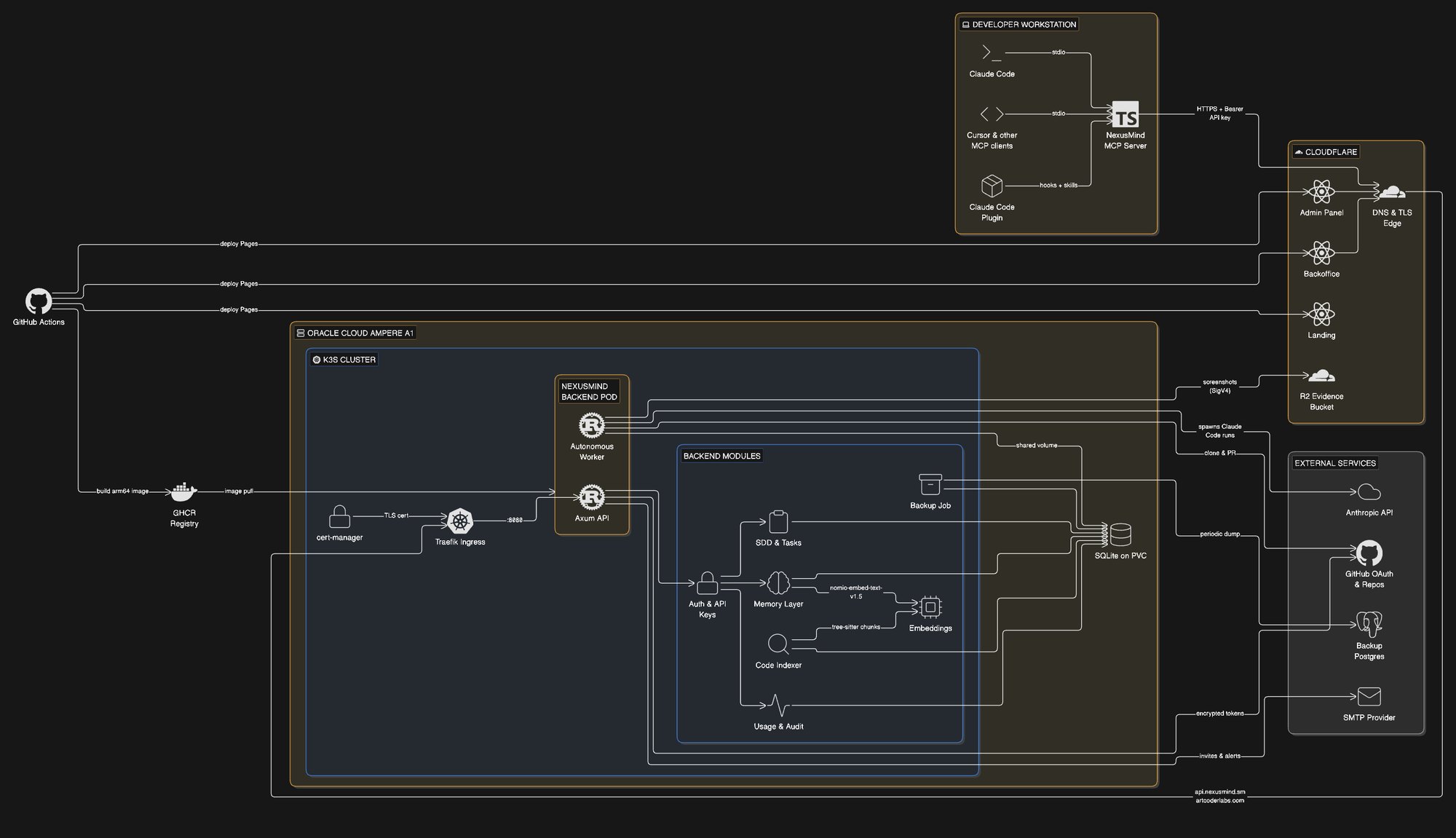
Both Rust processes live in a single pod on a K3s cluster, over one SQLite file on a persistent volume. Compose still runs the whole stack locally.

Zero client integration work

Because the front door is MCP, Claude Code and Cursor connect with a config entry rather than an SDK.

Architecture

Service

MCP server

TypeScript, stateless, runs on the developer machine

Turns MCP tool calls into REST calls against the API, forwarding the developer API key over HTTPS with a bearer token. Stateless by design: it can be killed and restarted mid-session.

TypeScriptMCP SDKstdio
Deployment topology. K3s on Oracle Cloud Ampere A1 behind Traefik and cert-manager, three Cloudflare Pages front ends, GitHub Actions building arm64 images into GHCR.

Decisions and the price I paid for them

Multi-tenant by construction

Each request resolves API key to user to organisation before storage is touched, so tenancy lives in the query layer rather than in handler code where it can be forgotten.

Trade-off accepted

Cross-org features, like sharing a memory between teams, will need an explicit escape hatch later.

Audit in the same transaction

The mutation and its audit row commit together, so there is no window where a change exists without a trail, and "who deleted this?" stays a query.

Trade-off accepted

Every write pays a little extra latency. Cheap at team-memory volume, wrong for a high-throughput event store.

MCP as the front door

Coding agents already speak MCP, so exposing store, search and record_decision as tools removed all client integration work.

Trade-off accepted

REST still exists for the admin panel, which means two surfaces have to stay in sync.

One file, and a Postgres that only ever receives

Rust plus SQLite on a persistent volume means no database server in the request path. A periodic dump into a managed Postgres exists purely as a restore target, so durability does not cost operational surface.

Trade-off accepted

One pod cannot scale horizontally without replacing SQLite. I accepted that ceiling deliberately rather than run Postgres from day one.

What the
platform does

Each capability stated twice: for the person using it, and for the engineer maintaining it

Semantic recall

Product

Ask for a decision in your own words and get it back, whoever wrote it and whichever tool they were using at the time.

Technical

Full-text search over SQLite with FTS5, ranked and then filtered by project, type and tag. Returns truncated previews, with a separate call for the full record so an agent does not burn context on results it will discard.

Team conventions

Product

The rules your team already agreed on, handed to the agent before it writes anything, instead of being re-explained in every prompt.

Technical

Conventions are a separate record type grouped into categories such as architecture, database, workflow and naming. get_context returns them ahead of recent memories, so they carry more weight than any single past session.

Code index

Product

The agent can look up a symbol in the actual repository rather than guessing from memory or grepping blindly.

Technical

Repositories are indexed per organisation and queried by symbol and by path, so a lookup resolves to real source rather than to whatever someone wrote down about it.

Projects and clients

Product

One team can hold work for several clients without their contexts bleeding into each other.

Technical

Every memory is scoped to a project, and projects can nest and carry a client. Scope is resolved server side from the API key, so a mis-scoped write is rejected rather than silently filed in the wrong place.

Roles and access

Product

Not everyone should be able to delete the team memory, and now they cannot.

Technical

Role-based access control over users and organisations, checked in the query layer alongside tenancy rather than in handler code.

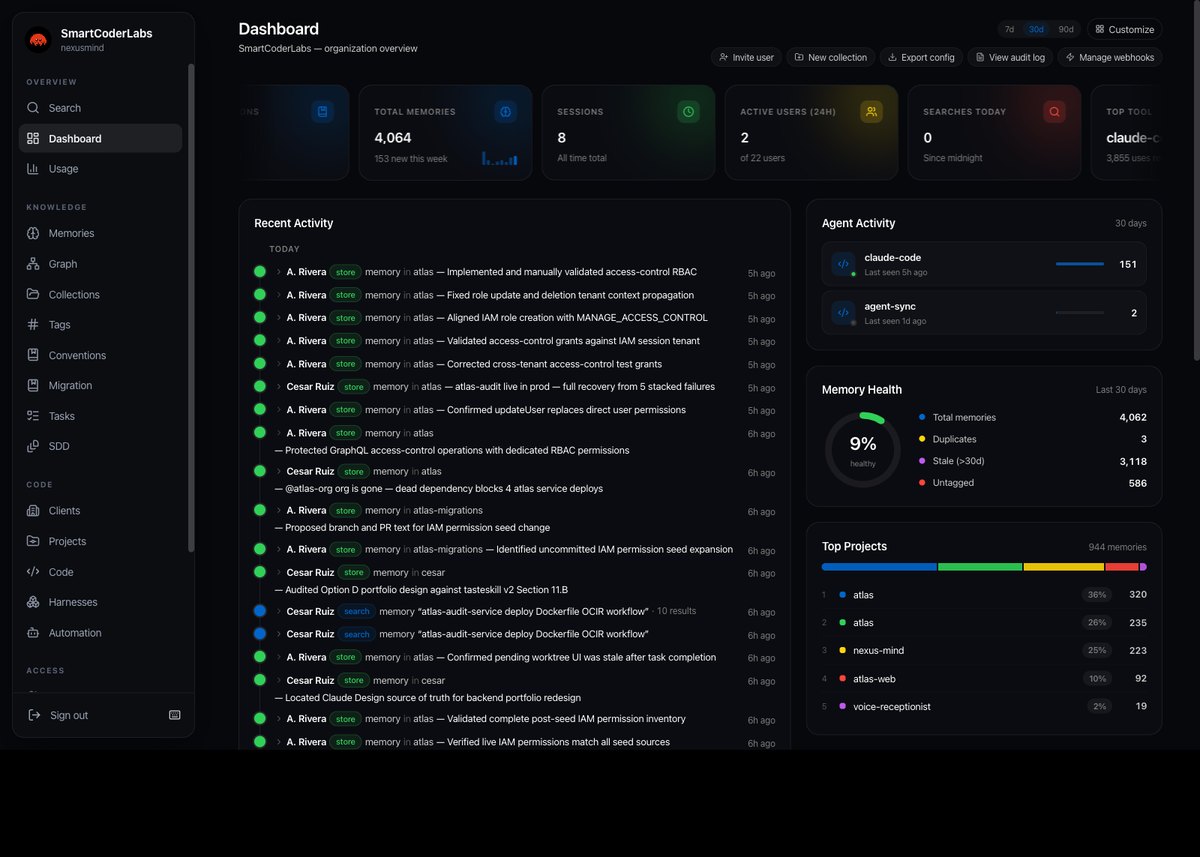
Memory health

Product

A shared memory rots quietly. This is the panel that tells you it is rotting before anybody notices.

Technical

Duplicate, stale and untagged counts computed across the organisation, so the store can be pruned deliberately instead of growing until search stops being useful.
Inside the build

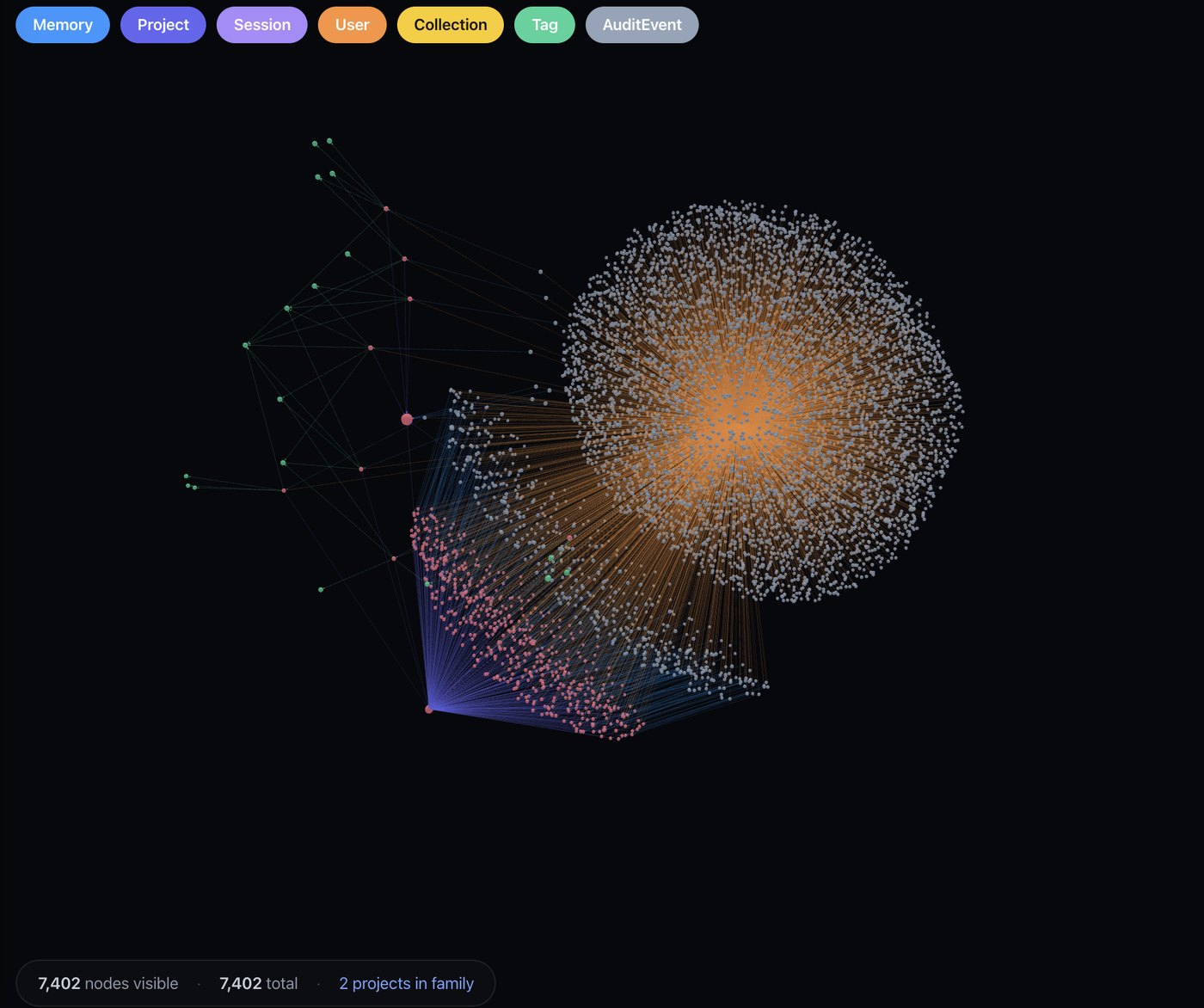
  1. Fig. 02

    The knowledge graph. Memories, sessions, users, collections, tags and audit events, typed and linked per project.

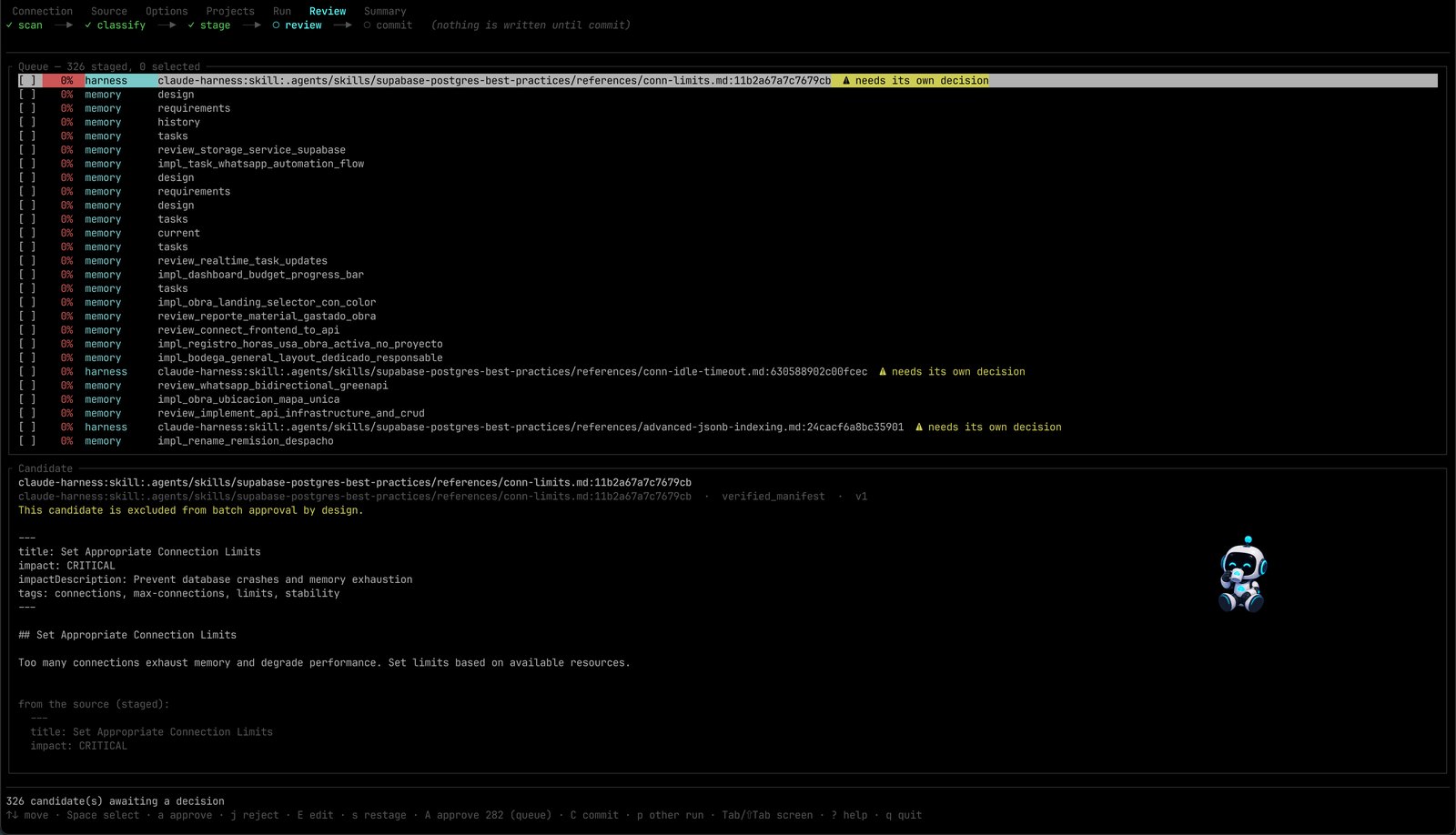
  2. Fig. 03

    The migration TUI. Scan, classify, stage, review. Nothing is written until commit, and some candidates are excluded from batch approval by design.

  3. Fig. 04

    The admin dashboard. Activity, agent usage and memory health. Tenant names anonymised.